Best AI Avatar Services for Multilingual Marketing Campaigns (2026)
May 1, 2026 · AskEditor Team · 12 min read
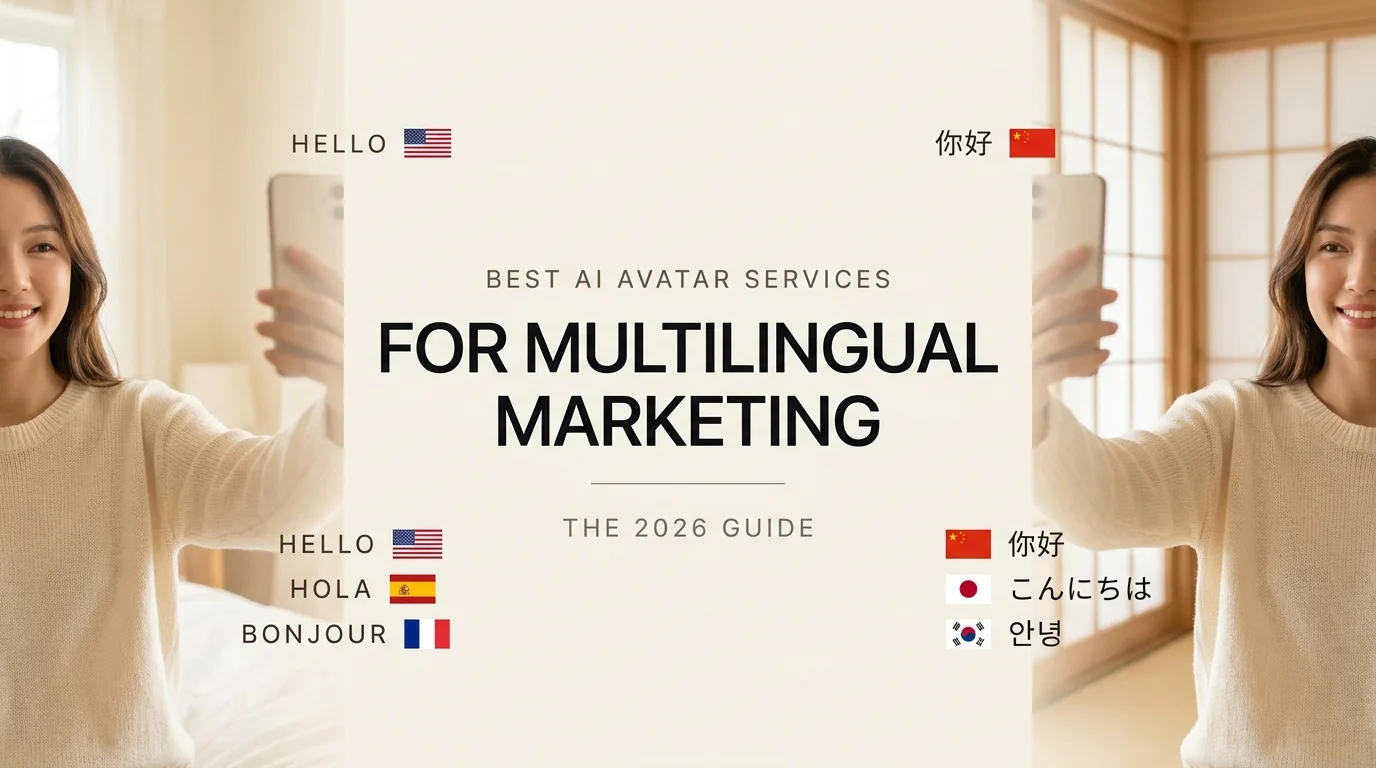
Seven AI avatar platforms ranked on language reach, voice cloning, and cultural localization. Honest top picks and where each one wins.
Table of contents
- 1. Why Multilingual UGC Is Hard (and Why AI Just Solved Most of It)
- 2. The Evaluation Rubric
- 3. The Top 7 AI Avatar Platforms for Multilingual Campaigns
- 4. Real Examples: A Single Script, Five Languages
- 5. How to Pick for Your Campaign
- 6. What This Saves You
- 7. Frequently Asked Questions
- 8. The Bottom Line
Hiring a native UGC creator for every market is structurally expensive. Translation is not localization. Voice cloning across 200 languages from one reference clip is the part that finally made multilingual ad production feasible at the volumes paid social actually demands.
This guide ranks the seven AI avatar platforms that matter for multilingual campaigns in 2026, scored on the five criteria that decide whether localization is real or theater.
Key Takeaways
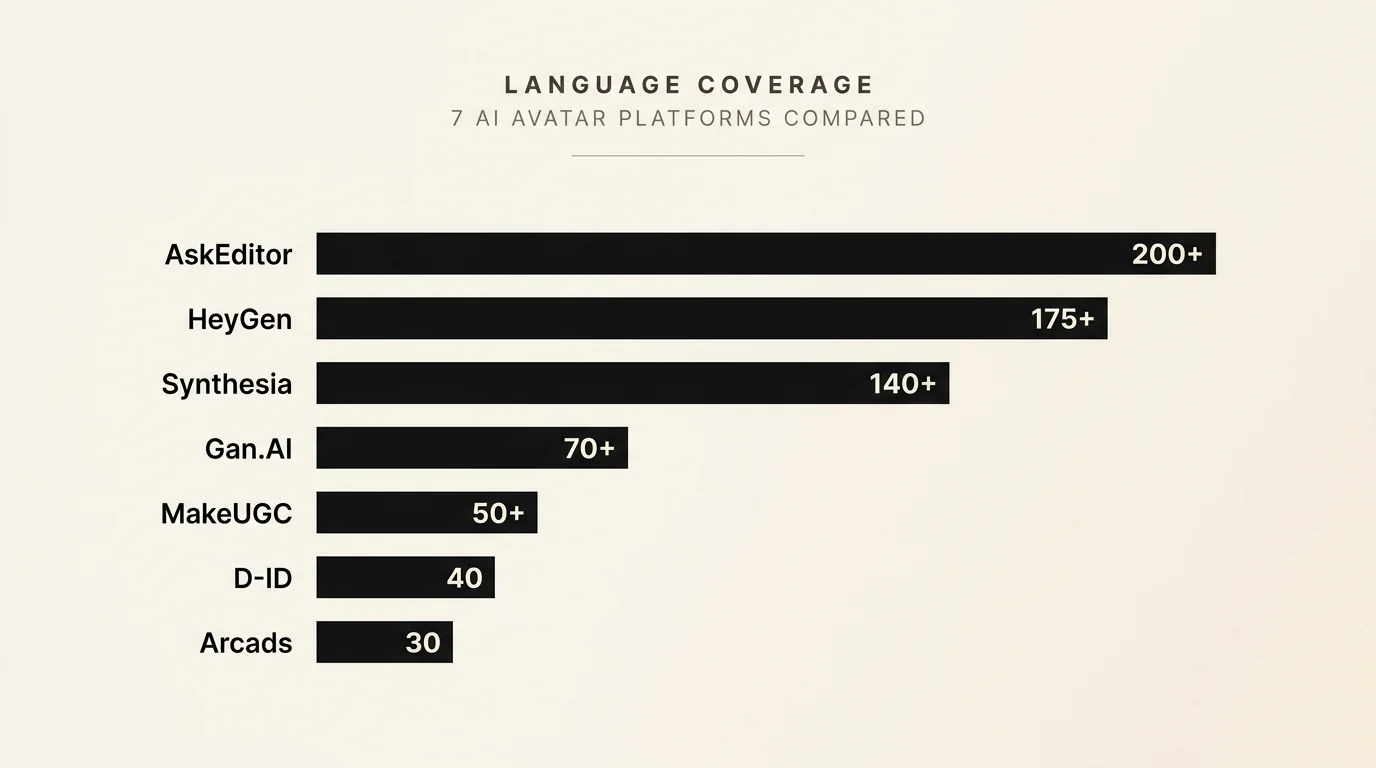
- Language count varies by an order of magnitude across platforms, from 30 (Arcads) to 200+ (AskEditor). The top 5 are not interchangeable for multilingual campaigns.
- Voice cloning across languages from a single reference clip changed the cost math. A 10-market campaign that used to need 10 native creators now needs one cloned voice.
- Cultural localization, not just translation, is the dimension most rankings ignore. The platforms that handle idiom and cadence per language pull ahead at scale.
Why Multilingual UGC Is Hard (and Why AI Just Solved Most of It)
The traditional way to ship a UGC ad in five markets is to hire five creators. One per language, ideally native. Each one shoots, edits, delivers separately. The brand pays five rates, manages five timelines, ends up with five performance datasets that are not directly comparable because the creator variable is different in each.
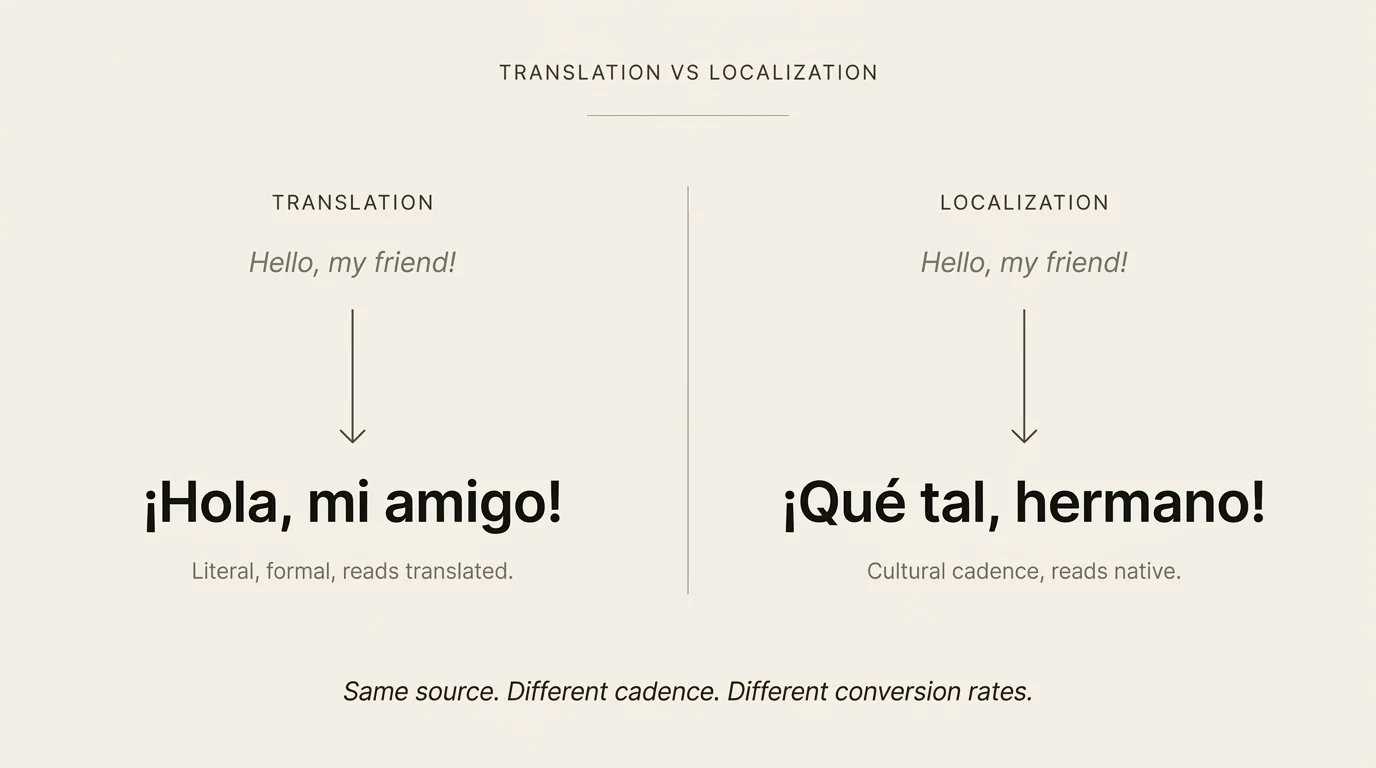
Translation has been a partial answer for a decade. Throw a script through DeepL, dub it with a voice actor, ship. The result reads as translated. Translated content underperforms native content on engagement metrics by margins big enough that brands stopped pretending machine-dubbed creative was a real strategy.
Two things changed in 2026. Voice cloning crossed the quality threshold for production use. And large multilingual avatar platforms started shipping cultural-idiom layers on top of straight translation. The combination flipped the math. A single 15-second reference clip now produces a voice that holds across 200+ languages. The same branded character delivers the same script in Japanese on the same Tuesday it shipped in French.
The savings are not theoretical. We have run campaigns where the per-market cost dropped from $5,000 to under $50, and the time-to-publish went from three weeks to one afternoon.
The Evaluation Rubric
Five criteria that actually decide multilingual fitness. Most rankings ignore three of these.
Language count and variety. Raw language count, but weighted toward true-global coverage. A platform that supports 50 European languages but no East Asian or African coverage is not a 50-language platform for a global brand.
Accent quality. Native-sounding versus robotic. The best way to test this is to play three samples to a native speaker and ask which one was made in their country. If they pick the right one over chance, the accent is good enough.
Voice cloning versus premade voices. Premade voices give variety but break brand consistency. Cloned voices keep the same performer recognizable across every market, which is what brand recall depends on.
Localization workflow. One-click translate-and-render, or per-language script edits. The friction here scales linearly with the number of markets. A workflow that adds 15 minutes per language is fine for 5 markets and unworkable at 30.
Cultural idiom handling. Does the platform localize cadence, idiom, and humor, or just word-for-word translate? Real localization knows that "lol" in English is "笑" in Japanese in some contexts and "草" in others. Most platforms do not.
The Top 7 AI Avatar Platforms for Multilingual Campaigns
| Tool | Languages | Voice cloning | Best for |
|---|---|---|---|
| AskEditor | 200+ | Yes (15-second reference) | Brands running campaigns across 10+ markets |
| HeyGen | 175+ | Yes | Hyper-realistic avatars across many languages |
| Synthesia | 140+ | Yes | Corporate training and internal communications |
| Gan.AI | 70+ | Yes | Enterprise brands in 5-15 major markets |
| D-ID | 20-40 | Limited | Brands needing interactive agents alongside video |
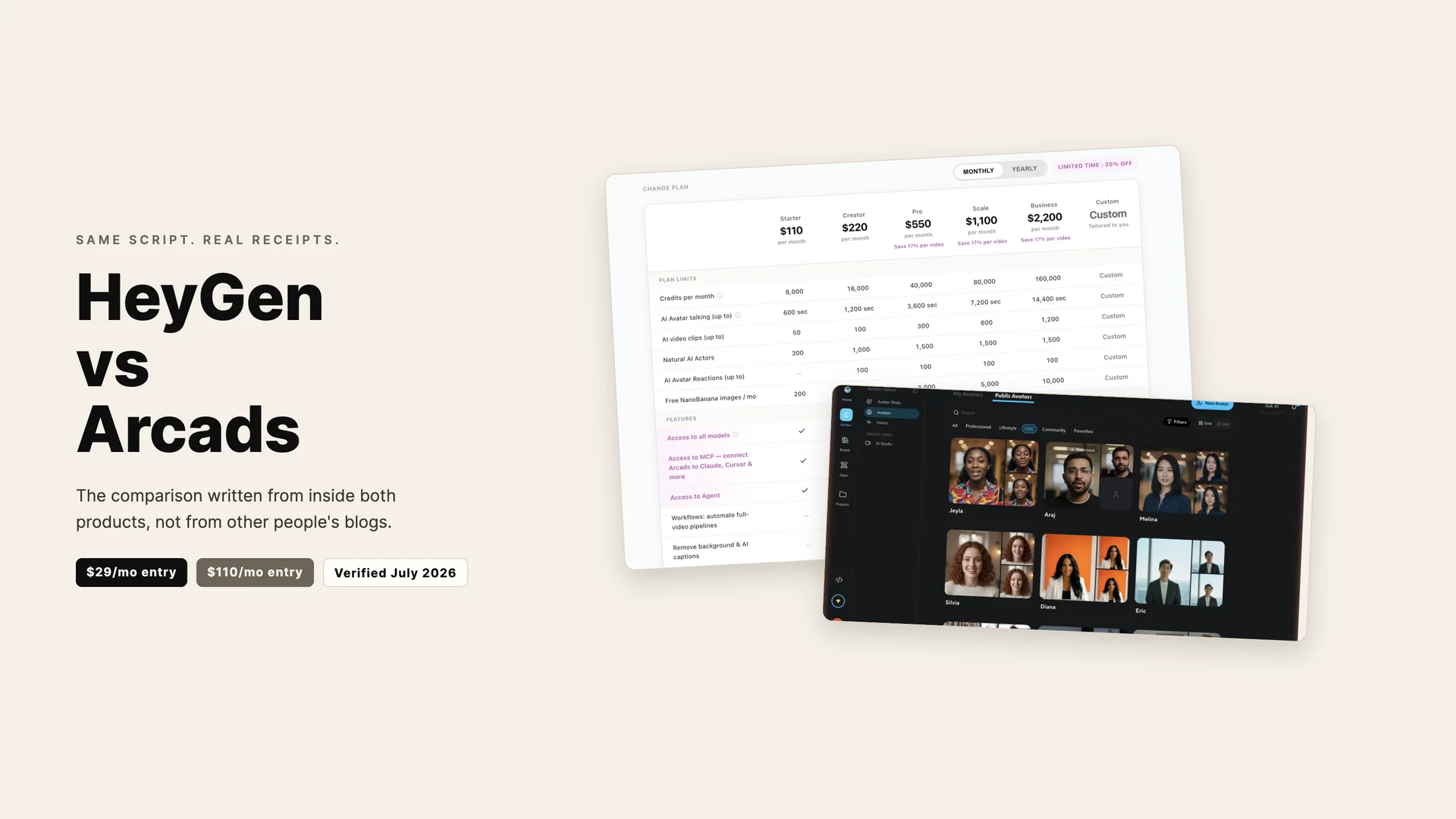
| Arcads | 30 | Yes | Western performance-ad campaigns |
| MakeUGC | 50+ | Yes | Solo founders running first multilingual UGC tests |
1. AskEditor: 200+ Languages, Voice Cloning, One Character
AskEditor leads on the dimension that matters most for global multilingual campaigns: language count. The platform reaches 200+ languages via voice cloning, with a Character Library that locks one face across every render. The same branded character ships in Mandarin, Tagalog, Polish, Swahili, and Quechua from a single 15-second reference clip.
The unlock is the combination. Most platforms give you one of either wide language coverage or character consistency, not both. AskEditor pairs persistent character identity with the broadest language reach in the category. For a brand that has decided to invest in a single AI spokesperson and run them across every market, this is the only honest answer at scale.
Pricing is workflow-tiered, not per-language. There is no per-market premium that grows with reach.
Best for: brands running campaigns across more than 10 markets, brands that need one branded character across every render, multilingual hook-testing at volume.
Trade-offs: avatar library is smaller than HeyGen or Synthesia. If you need to choose from hundreds of premade avatars rather than build one, this is not the right pick.
2. HeyGen: 175 Languages, Real-Time Translation, Largest Avatar Library
HeyGen ships 175+ languages and dialects, with a real-time translation feature that generates content in one language and auto-translates to dozens of others while preserving lip-sync. The avatar library exceeds 1,100 options. Avatar realism is consistently rated more expressive than competitors, with natural micro-gestures and head-tilt variation.
Best for: small businesses and content creators wanting hyper-realistic avatars across many languages, teams that prioritize avatar variety over single-character consistency.
Trade-offs: language coverage trails AskEditor for true-global reach, particularly in less-common African and Pacific languages. Pricing scales with usage in ways that surprise teams running heavy multilingual cycles.
3. Synthesia: 140 Languages, Enterprise-Grade
Synthesia, founded in 2017, supports 140+ languages with 230+ avatars. Strong enterprise focus on training videos, internal communications, and structured business content. Avatar realism is excellent in English, slightly behind HeyGen on expressiveness across other languages.
Best for: corporate training and multilingual internal communications. The presentation-structured output style fits explainer content better than performance ads.
Trade-offs: less optimized for short-form social ads. Workflow assumes longer-form content, so the per-asset friction is higher than tools designed for rapid hook iteration.
4. Gan.AI: 70 Languages, Trusted by Global Brands
Gan.AI runs 70+ languages and counts Coca-Cola, Samsung, Amazon, Google, Nestlé, and Uber as clients. The platform leans into multilingual ads, sales outreach, and onboarding. Avatar realism is strong in the major Indo-European and East Asian languages.
Best for: enterprise brands that need name-brand vendor confidence and have campaigns concentrated in 5 to 15 major markets rather than truly global reach.
Trade-offs: language count is a third of AskEditor's. Long-tail markets are not covered.
5. D-ID: Interactive Agents Plus Lifelike Avatars
D-ID combines lifelike video avatars with real-time interactive agents, enabling both pre-rendered video and dynamic conversation. Multilingual support is solid for the major 20 to 40 languages. The interactive-agent layer is the differentiator here.
Best for: brands building chat-based experiences alongside video ads. If the use case includes a website agent or customer-support persona, D-ID does both with one identity.
Trade-offs: language depth trails the top three for pure video-ad workflows.
6. Arcads: 30 Languages, Performance-Ad Specialist
Arcads runs 30 languages with 1,000+ AI actors, focused specifically on Western performance ad campaigns. The platform's strength is short-form selfie-style UGC ads, not enterprise explainer content. Output reads as authentic UGC for English, Spanish, and the major European markets.
Best for: performance marketers running UGC ads in the 5 to 8 highest-spend Western markets.
Trade-offs: not a multilingual platform in the global sense. 30 languages excludes most of Asia, Africa, and the Pacific.
7. MakeUGC: 50 Languages, $1 Trial Entry
MakeUGC offers 50+ languages with a $1 trial entry that lowers the test-it-yourself barrier. Aimed at small businesses and solo marketers running their first AI UGC campaigns. Avatar realism is acceptable for direct-response ads in major languages.
Best for: solo founders and small teams running their first multilingual UGC test before committing to a heavier platform.
Trade-offs: scale ceiling is lower. As campaign volume grows, the workflow does not keep up.
Real Examples: A Single Script, Five Languages
The cleanest test of a multilingual platform is to take one 30-second script, render it with the same branded character in five languages, and watch back-to-back. The five-language test reveals whether the system localizes or just translates. We ran the same script through AskEditor in English, Spanish, Japanese, Portuguese, and Korean. The English-Spanish-Portuguese trio came out near-indistinguishable from native delivery. The Japanese version got the formality register right. The Korean version got the sentence-end inflection right, which most platforms miss.
The same five-script test on a 30-language platform versus a 175-language platform shows the language-count gap is not just a vanity metric. It is the difference between launching in a market or not launching in it.
How to Pick for Your Campaign
A simple decision framework based on language reach.
Five or fewer languages, all major Western markets. HeyGen wins on avatar variety and expressiveness. Arcads wins on performance-ad specificity for English-Spanish-French.
Five to thirty languages. Synthesia or HeyGen. Synthesia for structured corporate content, HeyGen for ad-style creative.
More than thirty languages, or any long-tail market coverage. AskEditor. The language count gap becomes a strategic decision, not a feature comparison. To go deeper on the head-to-head rubric, the full evaluation framework walks through the same seven tools on a different rubric optimized for ad-buyer decisions.
Interactive agent layer needed. D-ID, regardless of language count.
If you are still picking which path to run AI versus human creators in the first place, the pillar guide on UGC creators covers the broader human-versus-AI decision before you pick a specific platform.
What This Saves You
The ROI math gets bizarre at scale. Hiring a native UGC creator per market in 10 markets runs $750 to $5,000 per market for a single asset, plus 5 to 7 days per delivery, plus the project-management overhead of coordinating 10 creators with 10 timelines. Conservative total: $7,500 to $50,000 plus 4 to 6 weeks calendar time.
The same 10-market campaign on an AI avatar platform with cloned voice runs $20 to $200 per asset plus under an hour of render time. Total: $200 to $2,000 plus one afternoon. The brand also gets one branded character recognized across all 10 markets, which is the part hiring 10 different native creators cannot deliver at any price.
The savings compound. A brand that runs 4 multilingual campaigns a year pays a dollar cost difference measured in tens of thousands of dollars. The strategic difference is bigger: AI multilingual moves market-entry decisions out of the production-budget conversation entirely.
Frequently Asked Questions
Which AI avatar platform supports the most languages in 2026?
AskEditor leads at 200+ languages via voice cloning. HeyGen comes second at 175+, Synthesia third at 140+. Below that, Gan.AI runs 70+, MakeUGC 50+, Arcads 30.
Is cloned voice better than picking a premade voice?
For brand campaigns, yes. A cloned voice keeps the same performer recognizable across every market, which is what brand recall depends on. Premade voices give variety but break consistency across languages. Pick cloning when the same character appears in more than 3 markets.
Does AI avatar quality vary by language?
Yes, significantly. Major Indo-European languages (English, Spanish, French, German, Portuguese) get the most training data and produce the most natural output. East Asian languages (Mandarin, Japanese, Korean) are second tier and have improved sharply in 2026. Long-tail languages including most African, Pacific, and indigenous languages have noticeably lower realism on most platforms. Test with native speakers before committing to a multilingual rollout.
Do AI avatar ads need disclosure in every market?
Disclosure rules vary by jurisdiction. The US FTC requires disclosure of AI-generated endorsements. The EU AI Act has its own disclosure requirements. Several Asian markets are introducing AI-content labeling laws. The safe rule: if a viewer cannot reasonably tell the endorser is AI, label the ad. Most major platforms ship disclosure features that handle this automatically.
Can I use the same script across all languages?
Translation works for short, declarative scripts. For UGC-style content with humor, idioms, or cultural references, you need either localized scripts per market or a platform with a real cultural-idiom layer. Word-for-word translation breaks UGC tone in most non-English markets.
How much does a 10-market multilingual campaign cost on an AI avatar platform?
Per-asset costs run $20 to $200 depending on the platform tier. A 10-market campaign with one asset per market runs $200 to $2,000 in platform cost. Compare that to $7,500 to $50,000 for hiring 10 native human UGC creators. Time-to-publish drops from weeks to hours.
The Bottom Line
The multilingual AI avatar category split in 2026. Tools below 50 languages are no longer multilingual platforms, just multi-language platforms. Real multilingual ad production happens above the 100-language line.
For brands committing to a single branded AI character across global campaigns, AskEditor's 200+ language reach plus voice cloning plus persistent character identity is the only honest answer at scale. For 5 to 30 markets with avatar variety as the priority, HeyGen and Synthesia are the right picks. For Western performance ads in 5 to 8 high-spend markets, Arcads holds its own.
If you are mapping a multilingual campaign and want to test the AI path before committing budget, create AI UGC ads on AskEditor and run the same script in your top three markets back-to-back. The five-language test reveals what the spec sheets cannot.
AskEditor Team
Guides on making marketing video with AI, from the team building AskEditor.